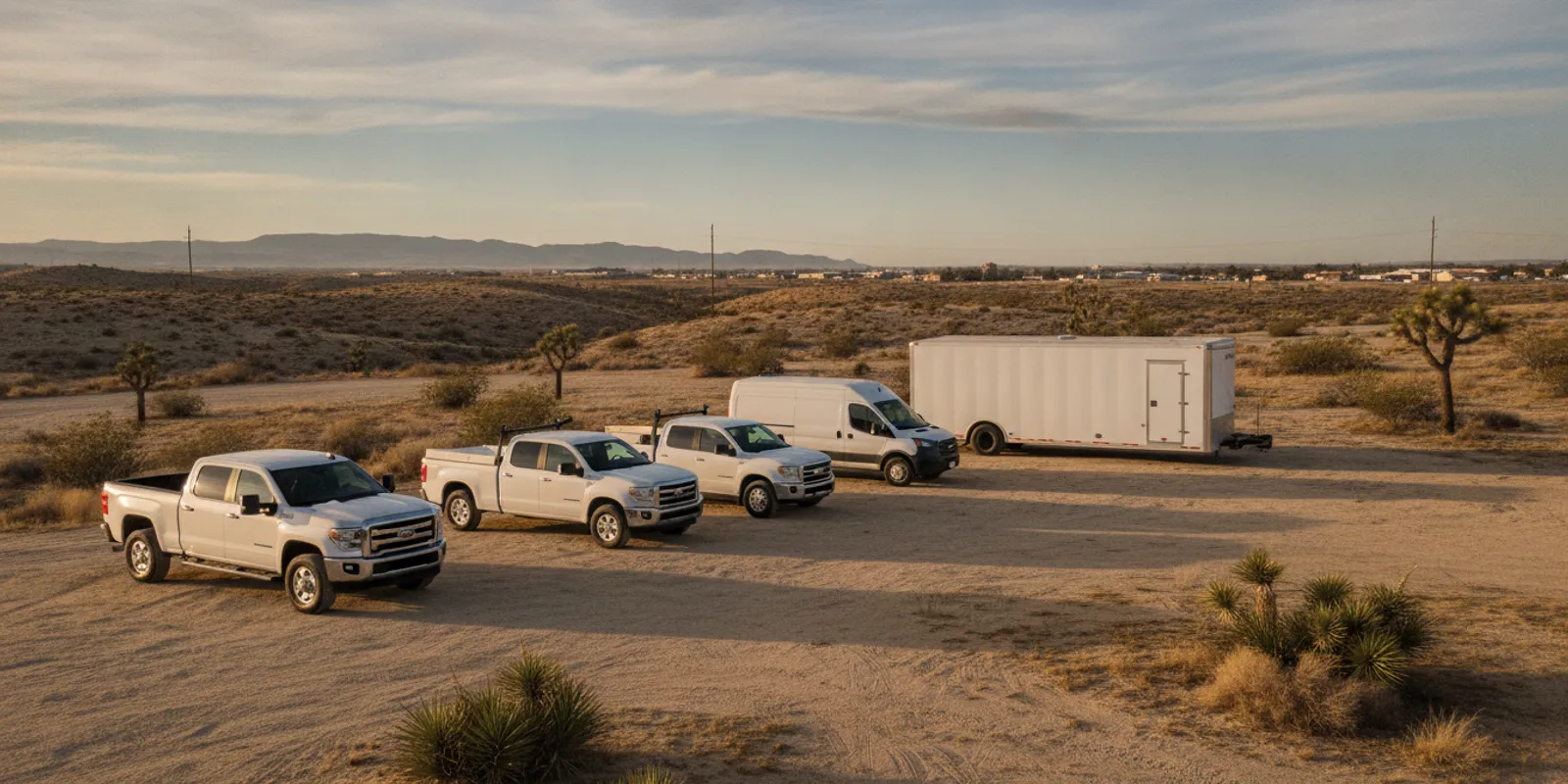
Commercial vehicle financing is a way to pay for a truck, van, or other vehicle a business uses for work without paying the full price at signing. The right choice depends on the job, who will own the vehicle, how long you will keep it, and what payment the business can support. A lower monthly number is not the whole answer. For Barstow and High Desert businesses, it also helps to match the vehicle to desert miles, cargo, and a budget that still covers fuel, insurance, and service.
What commercial vehicle financing means
Commercial vehicle financing usually means arranging a loan, lease, or other payment plan for a vehicle used in a business. That can be a work truck, a cargo van, or a passenger vehicle used for job sites and client visits. The label is about use and payment structure. It is not a promise that a lender will approve a business application, or that a tax rule applies.
Start with the vehicle's job. A pickup may carry tools. A van may protect equipment from heat and dust. A passenger vehicle may cover regular work travel around Barstow, Victorville, or Fort Irwin. The job changes cab size, cargo space, expected miles, and how long the vehicle should stay in service. Those facts also help a lender or finance team understand the purchase.
Mojave Auto Group brings Toyota, Nissan, Jeep, RAM, Dodge, and Chrysler together at one Barstow campus at 631 Main Street. A business can compare several vehicle types in one stop. Inventory changes, so confirm the exact truck or van before you treat a configuration as available.
Keep three ideas separate. The vehicle price is what you pay for that unit. The financing terms are the payment plan, if you use one. The operating cost is what it takes to insure, fuel, register, and maintain it on High Desert roads. Mixing those numbers makes a payment look smaller than the real commitment.
Which financing approach should you compare?
There is no single best structure. Compare the total obligation, how you will use the vehicle, and whether you want to own it. The table is a planning guide, not an offer. Approval, rate, and terms depend on the provider and the applicant.
| Option | How it generally works | Questions to ask |
|---|---|---|
| Vehicle loan | You borrow toward the purchase and repay on a schedule. The contract says when ownership transfers and whether the vehicle secures the loan. | What are the payment, term, down payment, amount financed, and fees? |
| Lease | You pay to use a vehicle for a set period. The lease sets mileage, condition, and end-of-term choices. | What is due at signing, and what happens if miles or wear exceed the terms? |
| Cash purchase | You pay the purchase amount without a vehicle loan. Insurance, tax, registration, and upfits can still apply. | How much working capital remains after the purchase? |
| Trade-in plus financing | An agreed trade value is applied to the next vehicle. Any remainder may be financed if approved. | Is the value final, and how is an existing payoff shown? |
Do not assume a lease or loan has a tax result, that a trade-in will clear a balance, or that business use qualifies you for a special program. Read the written terms. Ask a tax or accounting professional about your own records.
A loan often fits when you expect to keep the vehicle for years and want a path to ownership. A lease can fit a business that wants a set term and is comfortable with mileage and condition rules. Cash keeps financing costs out of the deal, but it ties up money you might need for payroll, parts, or repairs. A trade-in can reduce the amount you finance, but only after the value and any payoff are written down.
What should you figure out before applying?
A little preparation makes offers easier to compare. Lenders do not all ask for the same documents, and this list is not a guarantee of approval. The financing application at Mojave Auto Group asks whether the purchase is finance, cash, lease, or balloon, and whether the vehicle is new, used, or certified pre-owned.
- Define the work. Note cargo, passengers, routes, and whether the vehicle is used daily or only for some jobs.
- Set a full budget. Put the payment next to insurance, fuel, maintenance, registration, and any racks or storage.
- Decide who applies. Ask whether the lender wants an individual, a business, or both. Do not guess.
- Gather accurate records. Be ready for the business identity and financial details the lender requests.
- List current payments. Include vehicle loans or other debts you want discussed. Give complete information.
- Test the down payment. Ask how a larger or smaller amount changes the balance, and keep cash for other needs.
- Check trade-in facts. Note condition, mileage, title status, and any payoff. A value is not final until reviewed.
A one-page outline helps. Write the job, approximate yearly miles, what must fit inside, and the payment range you can support. Separate money you could pay upfront from money you need for payroll, supplies, or repairs. Those notes are not an application. They make your priorities easier to explain.
Desert use belongs on that page too. Highway miles to Victorville, job sites around Barstow, or a regular Fort Irwin commute can change tires, cooling, and service needs. If several people will share the vehicle, decide who tracks keys and maintenance before you shop.
How do you compare vehicle loans and offers?
Compare written terms on the same basis. A lower monthly payment may come from a longer term or more money due at signing. Put each offer beside the others and check the amount financed, schedule, term, rate if stated, fees, down payment, and total payments.
For many closed-end consumer credit sales, federal Regulation Z requires the creditor to disclose specific figures when they apply. The Consumer Financial Protection Bureau's section 1026.18 lists several of them. Those include the amount financed and the finance charge, which is the dollar amount the credit will cost you. They also include the annual percentage rate, the payment schedule, and the total of payments. Business-only credit can follow different rules, so ask whether those disclosures apply to your application. Either way, they are a useful checklist for reading an offer.
- Confirm the vehicle and price. Each estimate should name the same vehicle, or a truly similar one, and say what is included.
- Separate price from financing. Look at the vehicle price and the loan or lease terms as different parts of the deal.
- Match the assumptions. Use the same down payment, trade-in figure, and term when you can. If they differ, write that down.
- Ask what is still preliminary. Confirm which numbers can change after review, and which fees are included.
- Read before you sign. Check the final schedule and any limits. Do not rely only on a verbal summary.
Imagine two offers on similar vehicles. One has a lower monthly amount but a larger amount at signing or a longer term. The other costs more each month and ends sooner. Neither monthly figure wins by itself. Compare cash due now, total scheduled payments, fees, and how long the business expects to keep the vehicle.
Approval and rate depend on the lender's review. A dealership can explain the process and the vehicles. It cannot promise a rate, a payment, or an approval before that review and a written agreement.
Which vehicle details matter for business use?
Shop for the work, not for the word commercial. If you carry bulky gear, measure the bed or cargo area and check how you will load it. If a crew rides along, count seats and doors. If the route is a long High Desert drive, look at comfort and the equipment on that exact vehicle.
For a truck, compare cab and bed layout, secure storage, and how tools will ride. For a van, check cargo doors, weather protection, and whether people and equipment both need space. For a passenger vehicle used on work visits, balance occupants with the mix of business and personal miles. Do not treat a model name as payload or towing capacity. Verify the manufacturer's information for that vehicle.
Bring one real item's dimensions, or a note about the largest load you carry. Ask whether racks, a cover, or other equipment will reduce space or change what the vehicle can carry. If employees share it, decide who is responsible for fuel, keys, and service records.
New and used vehicles solve different problems. A new vehicle may match a specific configuration. A used or certified pre-owned vehicle may fit a lower price, but you should review history, mileage, and condition, then budget for maintenance. You can compare new vehicles and used vehicles before you talk numbers. Confirm the vehicle fits the job before you focus on the payment.
What business-use and tax questions should you ask?
Keep financing questions and tax questions apart. Whether an expense can be deducted, how to record business miles, and whose name should be on the title depend on your facts and on current rules. This article does not decide eligibility or tax treatment.
Ask an accountant how expected use, ownership, and the payment structure affect your books. Ask the lender what the contract says about who must pay and what happens if the vehicle is shared or sold. A lender explains its agreement. A tax professional advises on your situation. Those answers are not substitutes for each other.
Save the final agreement, payment records, and anything your accountant wants. If the vehicle has both personal and business miles, ask how to track them. Do not invent a business-use percentage, and do not assume a business name on an application settles the tax result.
How can a trade-in fit into the plan?
A trade-in may lower the amount you need for the next vehicle, depending on its value and any payoff. Start with condition, mileage, and loan status. If a balance remains, ask how the payoff is confirmed and where it appears in the paperwork. You can check a trade-in value while you plan, and you can read a separate guide on how trade-in value works at a dealership if you want the appraisal steps.
Look at the trade figure and the next vehicle's price as separate lines. That makes the math easier to follow. A preliminary estimate can change after someone reviews the vehicle, so do not treat an early number as cash in hand.
Before the visit, collect payoff information you can access and note obvious wear. Ask what inspection is required and how an outstanding balance shows up in the written deal. If selling the vehicle another way is also on the table, compare that path on its own. The value you receive and the amount you still owe depend on the actual vehicle and the documents.
What should you ask at the dealership?
Bring a short list so the visit stays on the work and the terms. Useful questions include:
- Which vehicles on the lot fit my passengers, cargo, and equipment?
- Can I see the vehicle price and the financing terms as separate figures?
- Who should apply, and what information starts the application?
- Which figures are preliminary, and what can change after review?
- What is due at signing, what is the schedule, and what total does the agreement show?
- How would a trade-in and any payoff appear in those figures?
- Can I read the final terms and ask questions before I decide?
Also bring a budget range and a plain description of the job. If you are cross-shopping brands, write the equipment on each vehicle so you are not comparing names alone. Mojave Auto Group's about page describes the group's new-vehicle, pre-owned, financing, and service help if you want that context first.
After the conversation, review the paperwork away from the desk. Make a sheet with the vehicle, price, down payment, trade assumptions, amount financed, schedule, fees, and term. Mark anything still unconfirmed. If an accountant needs to review ownership or taxes, leave time for that before you commit.
What does the payment leave out?
The payment is only one bill. A work vehicle in the High Desert also needs insurance, fuel, registration, and maintenance. Tires, cooling, and brakes can wear faster on long highway runs, heat, and dusty roads. Add any racks, liners, or storage before you decide the purchase fits.
Ask what routine service the vehicle will need and when. Service scheduling is separate from the purchase, but the cost belongs in the same budget. A payment that looks comfortable can strain the business if fuel and repairs were never written down.
Build a simple yearly sketch. Add the scheduled payments, a fuel estimate from your real routes, insurance, and a maintenance reserve. Then compare that total with the cash a shorter term, a larger down payment, or a different vehicle would require. The point is to see the commitment, not to chase the smallest monthly line.
Frequently asked questions
Does business use automatically qualify for a commercial loan?
No. Using a vehicle for work does not by itself select a loan type, a tax result, or an approval. Ask the lender which application fits and ask a tax professional about your records.
Should I compare only the monthly payment?
No. Also compare the amount due at signing, the term, fees, the amount financed, and the total you will pay. A smaller payment can hide a longer term or more cash up front.
Can I finance a used work truck or van?
Many buyers compare new and used vehicles, and the local application allows new, used, or certified pre-owned selections. Approval still depends on the lender, the vehicle, and the applicant. Review condition and maintenance needs before you focus on the payment.
Where do I see the amount financed and total of payments?
Ask for them in the written agreement. When Regulation Z applies to a closed-end consumer credit sale, the creditor discloses the amount financed, finance charge, annual percentage rate, payment schedule, and total of payments. If your deal is structured as business credit, ask which disclosures you will receive instead.
Can a trade-in be combined with financing?
Often the agreed trade value is applied to the next vehicle, and a remaining balance may be financed if approved. Confirm the value, any payoff, and the final amount in writing before you treat the trade as a set credit.
What is a practical next step?
Write down the job, the full budget, and the questions you still have. Then compare the vehicle and the written terms before you commit. Mojave Auto Group serves Barstow and nearby High Desert drivers with Toyota, Nissan, Jeep, RAM, Dodge, and Chrysler. You can contact the dealership to ask what is available, or start with the financing application if you already know the vehicle type.
Apply for financing before you visit
Commercial vehicle financing is only one part of the purchase. The right vehicle, clear written terms, and a budget that includes operating costs matter just as much. Compare each piece before you sign.