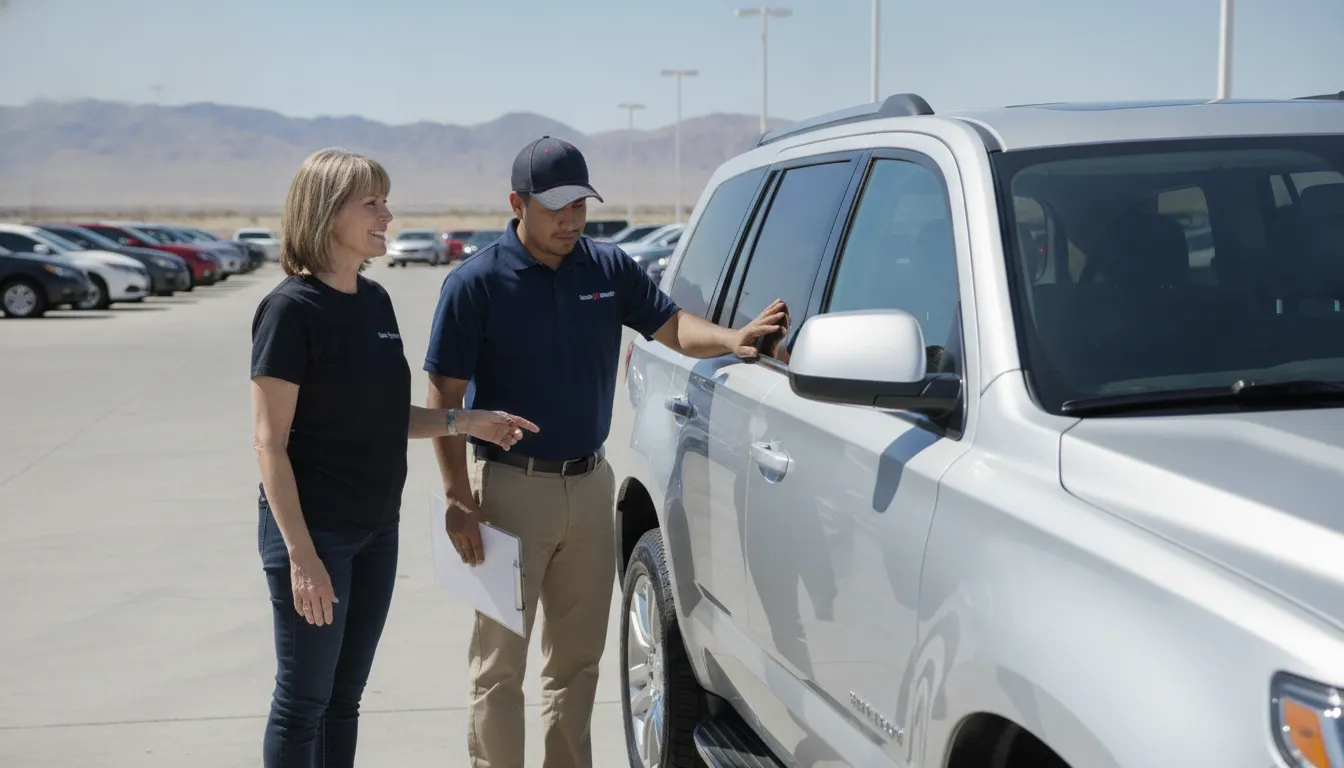
Trading in a vehicle can feel simple until you need to understand where the dealership's number comes from. For Barstow and High Desert shoppers, a clear appraisal process helps you compare your options without treating an online estimate as a promise.
How does trade-in value work at a dealership? A dealer reviews your vehicle details and condition, uses valuation data to develop an estimate, and may confirm that estimate through a later inspection before presenting a final appraisal.
Mojave Auto Group serves drivers in Barstow and surrounding High Desert communities through trade-in acquisition alongside new and used vehicle sales. Understanding the difference between an initial estimate and a completed appraisal is the starting point for evaluating the process, the information you provide, and the choices available for your next vehicle.
How does trade-in value work at a dealership?
When shoppers ask, "how does trade-in value work at a dealership," the short answer is straightforward. A dealer reviews the vehicle's details, condition, and suitability for its business, then makes an offer based on that review. The process usually begins with an estimate, but the estimate is not automatically the final trade-in value.
At Mojave Auto Group, the online workflow starts by identifying the vehicle. You can enter its information manually or use the VIN to help select the correct vehicle details. The tool then guides you through items such as the model style, features, condition, and available upgrades before you submit the information and arrange the next step.
Why an online estimate is not the final offer
An online estimate gives you a useful starting point based on the information entered and available valuation data. Mojave's tool integrates Kelley Blue Book data, but that data is an estimate rather than a guaranteed offer, dealership endorsement, or final appraisal. An estimate can change when a vehicle is reviewed in person because the written description may not capture every detail of its condition or equipment.
The in-person inspection is a separate part of the process. A dealership team can review the vehicle and compare the submitted information with its actual condition before determining the final offer. That distinction helps explain why an online number should be treated as an informed starting point, not a promise.
For shoppers in Barstow, Victorville, and nearby High Desert communities, you can start your vehicle appraisal online, provide accurate details, and bring the vehicle information and condition details into the follow-up discussion. A clear submission gives the dealership a better basis for reviewing the trade.
What does a dealer look at during a trade-in appraisal?
A dealership reviews the complete picture of your vehicle rather than relying on one detail. The appraisal usually considers the vehicle's identity, mileage, condition, history, equipment, and demand in the current market. These factors interact, so there is no single formula that guarantees a particular offer.
Vehicle details and equipment
The process starts with identifying the vehicle accurately, including its year, make, model, style, drivetrain, and other specifications. Features and upgrades can also matter because they help determine how the vehicle compares with similar cars, trucks, and SUVs available to shoppers. Missing or incorrectly selected equipment can make an online estimate less representative of the actual vehicle.
Mileage, condition, and history
Mileage helps establish how much use the vehicle has received, while condition assessment looks at the details a buyer would notice and a dealership would need to evaluate. Exterior and interior wear, tire condition, mechanical concerns, warning lights, and signs of previous damage may all affect the review. Service records and information about accidents, repairs, or title history can provide useful context. Be candid about known issues so the appraisal starts with accurate information.
Market demand and inspection
Local demand and current dealership needs can influence how a vehicle fits the market. A model that matches what shoppers in the Barstow and High Desert area are seeking may be evaluated differently from one with less immediate demand. That does not make the result predictable, because market conditions and the vehicle itself are considered together.
Mojave's trade-in workflow includes vehicle selection, style, features, condition assessment, upgrade options, submission, and inspection scheduling. The online estimate and later inspection are separate parts of the process, as described in the Mojave trade-in appraisal workflow. The inspection gives the dealership an opportunity to compare the submitted details with the vehicle in person. For that reason, an initial estimate should be treated as a starting point, not a guaranteed final offer.
How Kelley Blue Book and local market data shape an offer
Kelley Blue Book can help establish a useful starting point when you are researching a vehicle's trade-in value. Mojave Auto Group's valuation tool integrates Kelley Blue Book data, but that information is an estimate, not a guaranteed offer or final appraisal. The eventual offer can depend on the vehicle's actual condition, equipment, history, and what happens during the dealership's review.
Think of the estimate as one piece of a larger picture. Enter the vehicle details as accurately as possible, then compare the result with similar vehicles being advertised in your area. Local listings can show how comparable vehicles are being presented to shoppers, including differences in trim, mileage, options, and condition. They are useful context, but a listing price is not the same as a completed sale or a guaranteed trade-in value.
The Consumer Financial Protection Bureau recommends researching estimated values through sources such as Consumer Reports, Edmunds, Kelley Blue Book, and NADA Guides. It also suggests reviewing listings for similar vehicles in your area and seeking estimates from multiple dealerships. You can read its guidance on comparing trade-in estimates and vehicle values.
When comparing estimates, use the same vehicle information each time. Check whether each estimate assumes a similar condition and equipment level, and note whether the source describes an appraisal, an online estimate, or a private-sale reference. Keeping those distinctions clear makes the numbers easier to evaluate.
For shoppers in Barstow, Victorville, and nearby High Desert communities, local context can help explain why two estimates do not match. The most useful next step is an in-person review that confirms the vehicle details and condition. That process turns general valuation data into a dealership-specific offer without treating any single reference as the final answer.
How to prepare your car for a dealership appraisal
A little preparation can make the appraisal conversation more efficient and help you provide accurate information. It does not guarantee a higher offer. The dealership still needs to review the vehicle details and condition, and an online estimate is separate from a later inspection.
- Gather the vehicle details. Write down the VIN, model year, trim, approximate mileage, and notable factory or added features. Mojave's trade-in tool accepts either manual vehicle selection or direct VIN entry, so having the VIN available can help you identify the vehicle accurately. If you are unsure about a feature, say so rather than guessing.
- Collect ownership and loan documents. Bring the title and current registration if available, along with any paperwork that identifies the vehicle owner. If the car is financed, request current payoff information from the lender. The payoff amount may differ from the balance shown on a statement because of interest, fees, or other charges, so do not rely on an old statement alone.
- Bring every key and useful record. Gather primary and spare keys, service invoices, maintenance records, and documentation for substantial work or upgrades. These materials can help explain the vehicle's history, but no individual document universally determines the appraisal.
- Inspect and clean the car sensibly. Remove personal items, wash the exterior, and clear clutter from the cabin so the vehicle can be viewed easily. Make a short, honest list of known damage, warning lights, prior repairs, tire concerns, or mechanical issues. Cleaning improves presentation and access, but it does not promise a higher offer, and concealing a problem can create delays during inspection.
- Prepare questions before you arrive. Ask which parts of the appraisal are based on the information you provided, what the inspection will cover, whether additional documentation is needed, and how any loan payoff will be handled. Confirm that the trade-in value, if agreed upon, is clearly shown in the transaction paperwork.
Mojave's workflow includes vehicle selection, features, condition assessment, submission, and inspection scheduling. Bringing complete details lets you move through those stages with fewer surprises.
What happens if you still owe money on the car?
You can usually discuss a trade-in while an auto loan is still open, but the loan payoff needs to be part of the appraisal conversation. Start by asking your current lender for a payoff amount, then compare it with the vehicle's estimated trade-in value. The payoff amount may not match the balance printed on your latest statement because of interest calculations, late fees, other charges, or timing.
Positive equity can reduce what you need to borrow
If the vehicle is worth more than the payoff amount, the difference is positive equity. If the lender's payoff is lower than the trade-in value, that difference may be applied toward the next vehicle transaction, subject to the final appraisal and loan documents. A trade-in generally reduces the amount a buyer needs to borrow, but do not treat an online estimate as a guaranteed final offer.
Negative equity can increase the next loan's cost
Negative equity means you owe more on the current loan than the vehicle's trade-in value. In that situation, you may need to pay the difference, wait while you reduce the balance, or discuss whether the unpaid amount can be included in a new loan. Rolling the balance forward can make the new loan larger and increase total loan costs and interest over the life of the loan. Review the amount financed and total repayment carefully, rather than focusing only on the monthly payment. If you want to understand the financing options available for your situation, you can explore financing options and ask questions before signing.
Before deciding, verify both figures with the old lender and the dealership. After a new agreement is finalized, contact the previous lender's appropriate department to confirm the old loan was paid in full. The Consumer Financial Protection Bureau recommends checking with the former lender after the transaction, including waiting about one week before confirming payoff: CFPB guidance on trading in a car with an unpaid loan. Keep that confirmation with your purchase records.
Should you trade in your car or sell it privately?
There is no single right answer for every owner. A trade-in keeps the transaction connected to your next vehicle purchase, while a private sale puts you in charge of finding and working with the buyer. Compare the time, effort, control, and paperwork involved before choosing a route.
| Consideration | Trade-in | Private sale |
|---|---|---|
| Effort | The dealership can coordinate the appraisal and transaction as part of your vehicle purchase. | You manage the listing, inquiries, appointments, buyer screening, and follow-up. |
| Control | You can review the appraisal and negotiate the trade-in value as part of the overall deal. | You control how the vehicle is presented, which buyers you consider, and how you negotiate. |
| Convenience | The trade-in may reduce the amount you need to borrow for another vehicle, depending on the transaction and your equity. | You arrange the sale separately, then handle the next purchase and its financing on their own terms. |
| Paperwork and risk | The dealership handles its part of the transaction, but you should review every value, payoff, and agreement before signing. | You are responsible for completing the sale correctly, transferring ownership, and protecting your information during buyer interactions. |
A trade-in can be practical when you value a simpler handoff or want its value considered alongside your next vehicle. A private sale may appeal when you want direct control over the selling process and are prepared to manage each step yourself. Neither option guarantees a higher return or a faster result.
Before deciding, compare estimates and ask questions about how each offer was reached. The Consumer Financial Protection Bureau notes that consumers can seek estimates from multiple dealerships and negotiate trade-in value. It also explains that trading in generally reduces how much a buyer needs to borrow for another vehicle. Keep the trade-in and purchase figures clear so you can evaluate the complete transaction, not just one number.
What to expect when you use Mojave Auto Group's trade-in tool.
If you are shopping in Barstow, Victorville, or another High Desert community, Mojave Auto Group's online trade-in tool gives you a practical way to begin the appraisal process before visiting the dealership.
It supports vehicles from model years 1998 through 2026. You can identify your vehicle in either of two ways: select its details manually or enter the vehicle identification number (VIN).
Enter the vehicle details carefully
After you identify the vehicle, the tool guides you through several details that help describe what you own. The workflow includes vehicle selection, style, features, condition assessment, upgrade options, submission, and inspection scheduling. Take your time with each step. Select the equipment that is actually present, describe the condition honestly, and include meaningful upgrades when the tool asks about them. Accurate information makes the online estimate more useful for your next conversation.
The workflow is designed for shoppers considering trade-in acquisition through Mojave Toyota, Mojave Nissan, or Mojave Chrysler Dodge Jeep RAM. It can help you organize the basic information about your current vehicle while you consider your next purchase. If you are also exploring your options, you can browse used vehicle inventory separately.
Understand the estimate and inspection
The number shown online is an estimate, not a guaranteed final appraisal. The tool's estimate and the later inspection are separate parts of the process. During the inspection, the dealership can review the vehicle's actual condition and confirm the details submitted online. Differences between the initial information and the vehicle itself may affect the final evaluation, so bring the vehicle and its records ready for review.
When you are ready to begin, start your vehicle appraisal. You can use the estimate as one planning input, then discuss the vehicle's details and inspection with the Mojave Auto Group team before making a decision.
Frequently Asked Questions
What factors affect a dealership trade-in appraisal?
A dealer typically reviews the vehicle you identify, its style and features, reported condition, and details confirmed during the appraisal process. Mileage, service history, equipment, vehicle history, and current demand may also help shape the review. An online estimate is a starting point, while an inspection can provide additional information before a final offer is discussed.
Is Kelley Blue Book the final trade-in value?
No. Kelley Blue Book data can help provide an estimate, but it is not a guaranteed dealership offer or final appraisal. You can compare estimates for similar vehicles and discuss the trade-in value with more than one dealership. The vehicle's actual details and condition still matter when the appraisal is completed.
Can I trade in a car if I still have a loan?
Usually, you can begin the process, but first obtain the lender's current payoff amount rather than relying only on the balance shown on a statement. If you owe more than the vehicle's trade-in value, you have negative equity. Rolling that balance into another loan can increase total loan costs and interest, so compare your payoff, estimated value, and available options carefully. The Consumer Financial Protection Bureau explains these considerations at its auto-loan guidance.
Should I clean or repair my car before an appraisal?
Clean out personal items, gather maintenance records, and describe the vehicle's condition honestly. Bring available keys, registration, title information, and payoff details when applicable. Basic preparation can make the inspection easier, but no cleaning or repair guarantees a higher trade-in value. Ask which documentation the dealership needs for your situation.
Is trading in better than selling privately?
Neither option is always better. A trade-in can simplify the transaction when you are purchasing another vehicle, while a private sale leaves you responsible for marketing, buyer screening, negotiations, and paperwork. Compare the effort and control you want with the estimates you receive. The CFPB notes that shoppers can seek multiple trade-in estimates and negotiate the value.
Ready to start your trade-in appraisal?
Starting with accurate vehicle details can help you understand the information used in the appraisal before an in-person inspection and final review. Barstow and High Desert shoppers can start their online trade-in appraisal by entering the vehicle information requested in the tool. Bring those details, along with relevant ownership and vehicle records, when you continue the conversation with Mojave Auto Group. The online result is an estimate, not a guaranteed final value.