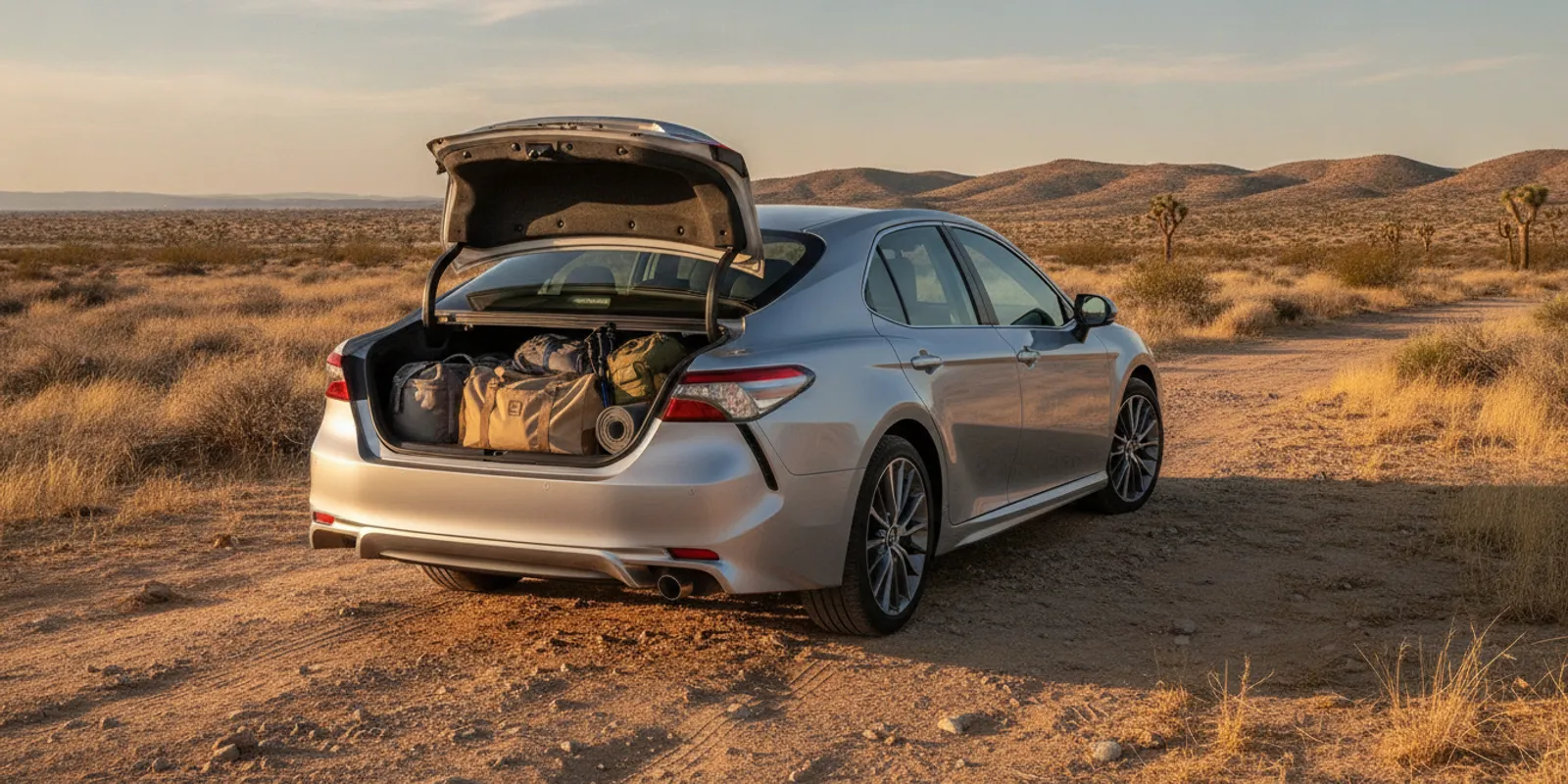
If you are comparing sedans for work, family errands, or a weekend drive, Toyota Camry trunk space is worth checking alongside passenger room and fuel needs. Recent Camry models offer a useful enclosed trunk for everyday cargo, but the exact capacity and how easily your items fit can depend on model year, trim, and the shape of what you carry. The most reliable test is to bring your regular bags and see how they load.
How much trunk space does a Toyota Camry have?
Recent Camry models are commonly listed with about 15 cubic feet of trunk capacity. Treat that as a useful starting point, not a guarantee that every Camry from every model year has exactly the same space. Model updates, powertrain, trim, and equipment can affect the published figure, and the shape of the trunk matters as much as its volume when you are loading a bulky object.
A cubic-foot number describes volume. It does not tell you whether a particular stroller fits through the opening, whether a cooler can stand upright, or whether you can fit four hard-sided suitcases without blocking access to smaller items. Two trunks with similar capacity can feel different because of their width between the wheel housings, depth, height beneath the trunk lid, and opening shape.
When comparing listings, confirm the model year and trim before relying on a specification. If you are looking at a hybrid or a different generation, verify the details for that specific car rather than assuming its cargo measurements match another Camry. The vehicle listing, owner information, or a direct measurement of the car can help resolve differences. You can also ask Mojave Auto Group about a specific Camry and the details you should check.
It helps to separate published capacity from the space you can use comfortably. For instance, a trunk may have enough total volume for several shopping bags but still make it awkward to slide a wide stroller past the opening. Think through how your largest item enters, where it rests, and whether you can still reach smaller items after loading. If you travel with a passenger's suitcase and a cooler, try arranging both together rather than testing each one alone. A practical fit means your usual cargo can be carried without forcing objects into place or leaving loose items likely to shift.
What can fit in a Camry trunk for everyday use?
For many drivers, the trunk is used for a changing mix of groceries, work bags, sports equipment, and luggage. A Camry's enclosed trunk can keep these items out of the passenger area and protected from view. Whether it handles your routine comfortably depends on the size and shape of your belongings.
- Groceries: Reusable bags and smaller grocery loads are easy to arrange, but large bulk packages may take up more room than their weight suggests. Keep cold items accessible and avoid stacking fragile goods beneath heavier ones.
- Work and school bags: Backpacks, briefcases, and compact equipment cases usually fit more readily than long or rigid items. Measure any instrument, presentation case, or work gear that you carry often.
- Weekend luggage: Soft-sided duffel bags can be easier to place around the trunk's contours than rigid cases. For a trip, load the largest case first and check whether smaller bags can be placed beside or on top of it.
- Sports gear: Balls, shoes, and compact bags are straightforward to plan for. Long equipment such as a golf bag, fishing rod case, or folded stroller needs a hands-on fit check.
Think about your most common load, not just a one-time maximum. If your weekday routine is two grocery bags and a laptop case, you may not need the cargo flexibility of a larger vehicle. If you regularly carry bulky family gear, the trunk opening and seat arrangement may matter more than the headline capacity.
Also consider how frequently your cargo mix changes. A commuter who carries a laptop case most days and a suitcase a few weekends a year may be comfortable with a compact everyday arrangement. A family making a weekly grocery run with multiple shoppers may need room to keep delicate items upright and separate from heavier packages. List the items you carry together, not just individually, since the combination can expose a practical limitation. If bags need to be stacked, check whether the stack stays below the rear window and whether you can still retrieve the items you need first.
How should you measure cargo before shopping?
A few simple measurements can make a showroom visit more productive. Start with the items you carry most often and measure their longest, widest, and tallest points. For objects that fold or collapse, measure them in the form you actually transport. A stroller, for example, may fit differently with a wheel or accessory attached.
- List your regular cargo. Include everyday items as well as the largest item you need to carry at least occasionally.
- Measure the items. Record length, width, and height. For soft bags, note the dimensions when they are packed as you normally pack them.
- Check the opening. A trunk may have enough interior volume but a narrower opening that makes a rigid object difficult to angle inside.
- Consider the loading motion. Think about how high you must lift an item, how far you need to reach, and whether you can arrange it without straining.
- Bring a sample. If practical, take a suitcase, cooler, stroller, or other representative item along for a fit check.
For an item that barely clears the opening, try placing it in more than one orientation. Do not force it past trim, hinges, or the trunk lid. A simple fit is better than a tight arrangement that risks damage or makes unloading difficult.
For a more reliable comparison, jot your measurements in a note on your phone and include the orientation that worked at home. You might record that a stroller measures a certain length after folding, but also note whether its handle or wheels make it wider at one end. For soft luggage, measure the packed bag at its fullest point rather than relying on the manufacturer's empty dimensions. If an item is heavy, rehearse how you would lift it over the trunk sill and lower it into place. A fit that requires an awkward twist every time may become inconvenient even when the item technically fits.
Does the trunk opening matter as much as the capacity?
Yes. The advertised cubic-foot figure measures the available volume, but shoppers interact with the opening and the usable floor. The opening determines whether a large object can enter. The trunk's shape determines whether the object can be turned or placed flat once inside. The lid and hinges can also affect how much space is convenient to use near the sides or top.
During a vehicle visit, check the opening from several angles. Look at the distance between the sides, the height from the ground to the loading edge, and the clearance beneath the open lid. Then examine the interior floor and corners. A broad, relatively low bag may fit easily while a narrow, tall box may not, even if both have similar volume.
Consider how you unload, too. If you often retrieve groceries from a crowded parking area, can you reach the items near the back? If you carry a folding mobility aid or heavy equipment, is the lift height manageable? A practical cargo fit is about access as well as capacity.
Try the loading sequence you would use at home. Place the larger, less frequently needed object first, then add smaller bags where they will remain reachable. Notice whether the trunk lid can close without pressing on the cargo and whether the load shifts when you gently move it. If you need to keep a fragile or temperature-sensitive item separate, check whether the arrangement leaves a stable place for it. These small details can make the difference between a trunk that works on a single test and one that feels manageable week after week.
Can the rear seats add cargo flexibility?
Some Camry configurations provide rear-seat backs that fold to extend the space from the trunk into the cabin. Availability and the seat-folding arrangement can vary by year and trim, so check the specific vehicle rather than assuming every model has the same feature. If a pass-through or split-folding seat matters to you, confirm how it operates and what portion of the rear seating area remains usable.
Folding a seat can help with longer objects that fit through the opening, such as a narrow package or some sports equipment. It does not turn a sedan into a large cargo vehicle. The height and width of the pass-through still limit what can be carried, and using a folded seat reduces seating for passengers. Keep cargo secured and do not allow it to obstruct the driver's view or interfere with safe operation.
Ask to see the seat release and fold the seat yourself during a vehicle check. Make sure it returns and latches as intended. If you need to carry both passengers and long cargo, test that exact combination rather than judging the feature from a photo.
How does a Camry trunk compare with a hatchback or SUV?
A sedan trunk has a closed, separate cargo area. That can be convenient for keeping bags out of sight and separating cargo from the cabin. Its main limitation is the fixed opening and the height of the rear deck. A hatchback or SUV usually offers a taller opening and a larger access area, particularly when the rear seats are folded, which can make loading bulky shapes easier.
That does not mean every driver needs an SUV. If your regular cargo consists of shopping bags, luggage, and small equipment, a sedan may be a sensible match. If you transport tall boxes, large outdoor gear, or a stroller alongside several passengers, compare the vehicle's actual cargo layout with your needs. A larger cargo area can be useful, but it is only one part of the decision; seating, parking, driving feel, and budget also matter.
Use the same items to compare vehicles whenever possible. Load a bag into the Camry, then try the same bag in any alternative you are considering. That gives you a clearer picture than comparing cargo-volume figures from different vehicle styles, where measurement methods and cargo configurations may not describe the same kind of use.
For a fair test, keep the comparison focused on your real routine. A tall SUV opening may make it easier to load a bulky object, while a sedan's separate trunk can be a useful place for everyday bags. Test visibility, passenger seating, and the effort involved in loading as well as raw volume. If you are considering more than one body style, write down what each one handles well and where you would need to change your usual packing habits. That makes trade-offs clearer than deciding from a capacity figure alone.
What should used Camry shoppers inspect in the trunk?
When looking at a used Camry, check both the space and the condition of the cargo area. Open and close the trunk, and look for signs of wear, damage, or moisture. Examine the carpeting, side panels, spare-tire or storage area if equipped, and the underside of the trunk lid. A musty smell or visible dampness deserves a closer look and a clear explanation before you make a decision.
Check that the latch works smoothly and that the trunk closes securely. Look at the weather seal around the opening for areas that appear loose or damaged. If the car has folding rear seats or a pass-through, operate it and confirm it returns to its normal position. Ask which accessories or cargo items are included rather than assuming an item shown in a listing photo comes with the car.
Condition and fit are separate questions. A clean trunk can still be too small for your regular gear, while a used model with signs of ordinary wear may have the shape you need. Bring your measurements and evaluate the specific car.
It is useful to inspect the trunk in daylight, when scuffs, stains, and uneven areas are easier to see. Lift removable floor panels only if they are designed to be lifted, and check any storage compartment for the items or tools the seller says are included. Look at the carpet around the edges and beneath mats for differences in color or texture. These observations do not establish a cause by themselves, so ask clear questions about anything unusual and consider a qualified inspection if you have concerns about the vehicle's overall condition.
What should you test before choosing a Camry?
Use a short cargo checklist during your visit:
- Confirm the model year, trim, and any cargo-related equipment.
- Open the trunk fully and check how easy the lid is to reach and close.
- Test the opening with your largest regular item, or compare its measurements with the opening.
- Place your everyday bags inside and see whether they can be arranged without blocking access to one another.
- Ask whether the rear seats fold or include a pass-through on that specific vehicle.
- Check whether loading height and reach feel comfortable for the people who will use the car.
- Make sure the cargo stays below the level that blocks your rear view, and plan to secure loose items.
If you are shopping with family, involve the people who will regularly load or unload the car. A parent may focus on stroller access, while another driver may care more about luggage for work travel. Testing those needs together can prevent a decision based on a single number. For questions about available vehicles or a visit, contact Mojave Auto Group.
Before you leave, repeat the check with a realistic trip load rather than an idealized empty trunk. For example, picture a weekend drive with one large suitcase, two smaller bags, and the items you want close at hand. Confirm that passengers still have their usual seating space and that cargo can be kept secure. If you cannot bring your belongings, keep their measurements available and ask to compare the car with those dimensions. A few minutes spent checking a specific vehicle can clarify whether it fits better than an online specification can.
How do financing and trade-in plans fit into the decision?
Choose a vehicle based on the complete fit: cargo, passenger comfort, driving needs, and the payment plan that works for you. A trunk that meets your needs does not by itself determine whether the full vehicle is a good choice. Compare the specific vehicle price and available terms, and review the details that affect your total cost before making a decision.
If you have a vehicle to trade, its value may be part of your shopping plan. A valuation is an estimate, and the final amount can depend on the vehicle's condition and review. Keep your budget and preferred vehicle details in view as you compare options. Mojave Auto Group serves Barstow and High Desert shoppers across Toyota, Nissan, Jeep, RAM, Dodge, and Chrysler, so you can ask about available choices that match your priorities.
Contact Mojave Auto Group with your questions
Frequently asked questions
Is Toyota Camry trunk space enough for family use?
It can work well for many everyday family needs, such as groceries and luggage, but the answer depends on your family's gear. Measure a stroller, sports equipment, or other bulky items and test how they fit through the trunk opening before choosing.
Do all Toyota Camry model years have the same trunk capacity?
No. Specifications can differ by model year, generation, and configuration. Check the information for the exact car you are considering, particularly when comparing different years or powertrains.
Will a large suitcase fit in a Camry trunk?
It depends on the suitcase's dimensions and the trunk opening. Measure the case and, if possible, bring it along to test the opening and interior space. A soft-sided bag may be easier to arrange than a similarly sized rigid case.
Can I carry long items in a Camry?
Some configurations may allow the rear seat to fold or provide a pass-through, but feature availability varies. Confirm the setup on the specific Camry and check the item's length and width against the opening before relying on it.
What is the best way to decide?
Use the published capacity as a starting point, then test the actual trunk with the items you carry. Check model-year details, the opening, seat flexibility, and ease of loading. That practical check will tell you more about whether a Camry fits your routine than a volume figure alone.