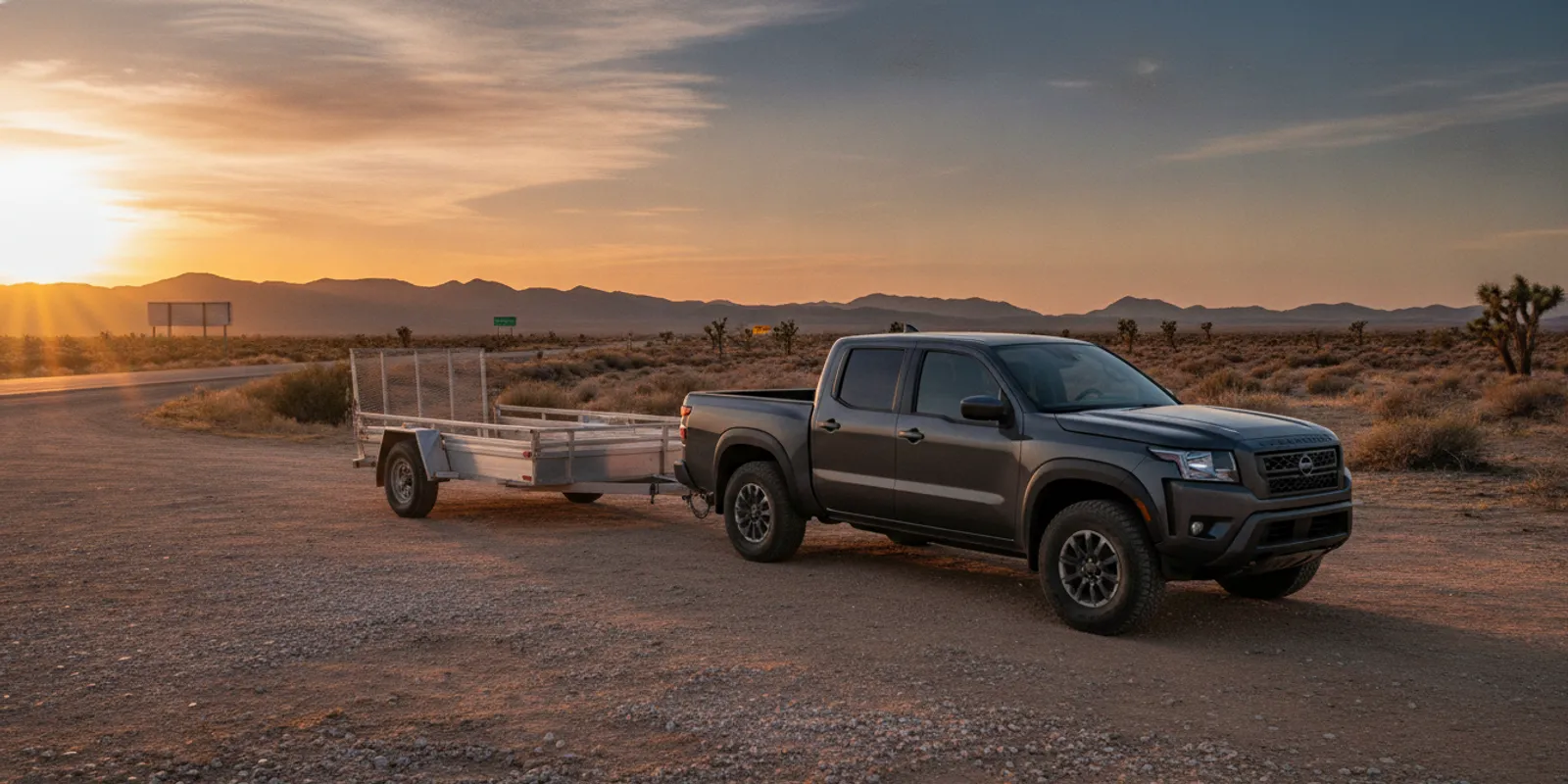
Nissan Frontier towing capacity is not one number that applies to every truck. The rating can change with model year, drivetrain, cab and bed configuration, and factory equipment. If you are comparing a Frontier for a boat, camper, utility trailer, or work equipment in the High Desert, the safest first step is to match the rating to the exact truck and the trailer as it will actually be loaded.
What does Nissan Frontier towing capacity tell you?
Towing capacity is the maximum trailer weight a vehicle is rated to pull under specified conditions. It is a useful comparison figure, but it does not tell the whole story about whether a particular truck-and-trailer combination is appropriate. Passengers, cargo, equipment added to the truck, trailer tongue weight, and the trailer’s own loaded weight all matter.
Think of the published capacity as a limit to verify, not a target to approach automatically. A trailer may be within the truck’s advertised maximum and still leave too little room for passengers, gear, or the truck’s other weight limits. The exact ratings and instructions for the specific model year and configuration are the ones to use.
That is why a shopper should ask two separate questions: “What is this Frontier rated to tow?” and “Does this Frontier have enough capacity for my fully loaded trailer and the people and cargo I will carry?” The first answer comes from the vehicle’s official information. The second requires comparing several figures, not just one headline number.
Why can Frontier towing ratings vary?
Model year is a key starting point. Specifications can change between model years, so a rating you find for a new Frontier may not apply to an older used one. Even within a model year, two Frontiers may have different ratings because their configurations or equipment differ.
Drivetrain, cab and bed configuration, axle or package choices, and factory-installed towing equipment may affect the rating. Do not assume that two trucks with the same model badge have the same capability. A used vehicle listing may not provide enough detail to identify every relevant option, so confirm the vehicle itself and its documentation.
Also distinguish a factory towing package from equipment added later. An aftermarket hitch can provide a place to connect a trailer, but it does not by itself raise the truck’s rated capacity. The hitch, receiver, wiring, tires, and other components must be appropriate for the intended use, and the truck remains subject to its manufacturer ratings.
For an individual truck, review the owner’s manual and the information on the vehicle’s certification labels. If the details do not clearly establish the rating for that configuration, ask the manufacturer or a knowledgeable dealership representative to help identify the correct source. Avoid choosing a number from a search result that does not specify the same year and setup.
Which weight ratings should you check?
Before comparing a Frontier with a trailer, identify the important weights and limits. The terms can sound technical, but each answers a practical question. The table below is a checklist of what to find; it is not a substitute for the ratings on your particular truck and trailer.
| Rating or weight | What it describes | What to verify |
|---|---|---|
| Maximum trailer weight | The trailer weight the truck is rated to tow under the specified configuration and conditions. | Use the model-year and configuration-specific figure, not a broad model range. |
| Trailer’s actual loaded weight | The trailer plus everything carried in it for the trip. | Include water, fuel, supplies, accessories, and cargo, not only the empty or advertised weight. |
| Gross vehicle weight rating (GVWR) | The maximum permitted loaded weight of the truck itself. | Account for occupants, cargo, installed accessories, and the load imposed at the hitch. |
| Gross combined weight rating (GCWR) | The maximum permitted combined weight of the loaded truck and trailer, when specified. | Compare the actual combined load with the limit for the exact vehicle. |
| Payload | The available capacity for people and cargo carried by the truck, subject to its limits. | Remember that trailer tongue weight also uses capacity carried by the truck. |
| Hitch and receiver ratings | The limits for the towing hardware and its permitted use. | Check that every relevant component is rated for the load and setup. |
Weight ratings work together. A truck does not become suitable simply because the trailer is below its maximum trailer-weight rating. The loaded truck must also remain within applicable vehicle and combined-weight limits, and towing hardware must be correctly matched. If you are uncertain how a rating applies, pause and confirm rather than estimating.
How do you estimate the trailer weight you need to tow?
Start with the trailer’s identification plate and manufacturer documentation. Find its unloaded or dry weight, maximum loaded weight, and any information about the expected load. The dry figure is not the weight you should use if the trailer will carry people’s belongings, water, fuel, tools, recreational equipment, or other cargo.
- Write down the trailer’s empty weight. Use the figure from the trailer manufacturer or its identification information. Check that it describes the trailer you own or plan to buy.
- Add the items that will travel in it. List cargo, supplies, fluids, accessories, and any equipment. Use actual weights where possible rather than relying on a rough visual estimate.
- Include the truck’s occupants and cargo. Count the people, bags, tools, and accessories that will be in the Frontier. Remember that a trailer’s tongue weight is carried by the truck and affects its available payload.
- Compare the combination with every applicable limit. Check the exact Frontier’s trailer rating, vehicle weight and payload limits, combined limit if provided, and the ratings of the hitch and related equipment.
- Confirm the loaded weights when the margin matters. A public scale or qualified weighing service can help establish actual weights. Weighing the loaded setup is more dependable than assuming the empty trailer specification describes a real trip.
As a simple planning example, imagine that a trailer’s brochure lists its empty weight and you plan to load it with camping gear and supplies. The brochure figure is only the beginning. Add the planned cargo, then check the truck’s payload and other limits as well as the towing rating. The point is not to reach a particular capacity number; it is to know the complete load before deciding.
How should you compare a Frontier with your trailer?
Build a short worksheet before you choose a truck. Record the exact Frontier model year and configuration, the source of its ratings, the trailer’s expected loaded weight, the people and cargo in the truck, and the hitch equipment. Mark any detail that remains uncertain instead of filling the gap with a guess.
Then compare the trailer’s expected weight with the vehicle’s specified maximum trailer weight and review the other limits separately. A vehicle may pass one check and fail another. For instance, the trailer could be within its tow rating while passengers and gear bring the truck close to a payload or gross vehicle limit. The answer depends on the actual weights and the truck’s official ratings.
Leave a practical margin when planning. Travel loads can change, and estimates are not always exact. A setup that only works if every weight estimate is perfect gives you little flexibility for an extra passenger, supplies, or equipment. If the expected load is near a limit, get accurate weights and confirm the setup with a qualified source before towing.
Also consider how and where you will use the truck. A regular commute, a weekend boat trip, and repeated hauling on hot or steep roads are different ownership needs. Towing adds demands to driving and requires attention to road conditions, braking, following distance, visibility, and safe loading. Stay within the vehicle and trailer manufacturers’ instructions and adjust driving to the conditions.
What should High Desert shoppers consider?
Barstow and nearby High Desert communities bring a mix of daily driving, highway travel, work needs, and outdoor recreation. A truck that is used mostly for commuting may have different priorities from one that regularly tows a loaded trailer. Think about the trips you actually make, how often you tow, and what you carry when you do.
Heat, wind, grades, traffic, and long stretches between destinations can influence how a towing trip feels. They do not change the vehicle’s certified rating, but they can affect planning and driver workload. Make sure the truck and trailer are maintained, tires are appropriate and properly inflated according to their instructions, cargo is secured, and the route and stopping plan make sense for the combination.
Consider storage and daily usability, too. Cab space, bed length, parking, fuel needs, and how easily you can connect and inspect your trailer are part of ownership. If you tow only occasionally, ask whether the truck’s everyday fit is still right for your household. If towing is a frequent job requirement, prioritize a configuration that meets the real loaded requirement with room to manage your other vehicle limits.
Shoppers comparing new and pre-owned trucks should be equally careful about configuration details. For a used Frontier, confirm the model year, exact equipment, condition of the hitch and wiring if present, and any available documentation. Do not assume a trailer accessory or previous owner’s setup is approved for the truck’s current condition or your intended load.
How can you make a towing test drive useful?
A normal test drive without a trailer can help you assess seating, visibility, controls, and ride comfort, but it cannot demonstrate how your own loaded trailer will behave. Never attach a trailer for a test drive unless the dealership has approved the arrangement, the vehicle and equipment are suitable, and the driver is prepared to operate that combination safely.
For an initial visit, bring the details of your intended use instead. Have the trailer’s make, model, and weight information ready, along with a realistic estimate of cargo and passengers. Ask the representative to help identify the exact truck configuration and where its ratings are documented. If the dealership cannot verify a detail during the visit, get the correct source before making a decision.
On the drive, evaluate the truck as you will use it day to day. Check whether the seat and mirrors adjust comfortably, whether controls are easy to reach, and whether you can see around the vehicle. Think about cab and bed space for your regular needs. These observations help assess ownership fit, but they should not be treated as proof that a truck can tow a specific load.
After the drive, compare the vehicle information with your worksheet. If you are shopping across configurations, repeat the check for each truck rather than carrying one rating over to another. A few minutes confirming a specific vehicle can prevent a costly mismatch between the truck, trailer, and planned use.
Think through the complete towing routine, not only the trip once you are on the road. You need to connect the trailer, check lights and safety equipment, load cargo so it is secure, and make sure the combination is within its ratings before leaving. Consider whether you have a suitable place to park and turn around at home or at your destination. These practical details can matter as much as a specification when deciding whether a pickup fits your plans.
Make a list of equipment you expect to carry in the truck, including toolboxes, bed covers, racks, or other accessories. Added equipment contributes weight, even when it is permanently installed. If you regularly carry work materials or recreational gear, include a representative load in your planning instead of evaluating the truck as though it will always be empty. Discuss the actual use case when comparing configurations.
When comparing a new truck with a pre-owned one, avoid judging solely by model name or a seller’s summary. A newer vehicle can have a different specification from an older one, and two examples from the same year may still differ in equipment. Identify the vehicle by its documentation and configuration, and ask how to verify the relevant capacity. For a pre-owned truck, inspect for signs that towing equipment has been altered or damaged, and have any mechanical concerns assessed by a qualified professional.
Finally, separate capability from comfort. A truck may meet a set of weight limits but still not be the best daily fit for your family, commute, or work. The cab, bed, parking needs, and frequency of towing all belong in the decision. Matching the vehicle to a realistic routine helps you compare options on more than a single maximum figure.
What questions should you ask before choosing?
- What is the model year and exact configuration of this Frontier?
- Where can I verify the towing, payload, vehicle-weight, and combined-weight ratings for this specific truck?
- Does the truck have the factory equipment required for the use I have described?
- Which hitch and towing components are fitted, and what are their ratings?
- What trailer weight should I use after loading cargo, water, fuel, and accessories?
- How will passengers, luggage, and tongue weight affect the truck’s payload?
- Can I confirm the actual loaded weights at a scale before regular towing?
- For a used truck, are the relevant labels and equipment present and readable, and is the towing hardware in good condition?
Clear answers should refer to the specific vehicle and authoritative documentation, not just a model-family maximum. For general safe-driving information, consult the National Highway Traffic Safety Administration; use the Frontier and trailer manufacturers’ documentation for the exact ratings and operating instructions.
Frequently asked questions
Is there one towing capacity for every Nissan Frontier?
No. The applicable rating can vary by model year and configuration. Confirm the exact truck’s information rather than assuming that every Frontier shares a single capacity figure.
Does adding a hitch increase the truck’s towing capacity?
No. Adding a hitch does not change the manufacturer’s rating for the truck. The hitch and other towing components must be suitable for the intended load, and all vehicle limits still apply.
Can I use a trailer’s empty weight to decide whether it is within limits?
Not if you will carry cargo or fluids. Plan around the trailer’s actual loaded weight, including supplies, equipment, and accessories, and account for tongue weight and the truck’s occupants and cargo.
Where can I verify the rating for a specific Frontier?
Check the owner’s manual and the vehicle’s certification information for the exact model year and setup. If the rating is unclear, ask the manufacturer or a dealership representative to help locate the applicable official documentation.
What is a practical next step?
Before choosing a truck, collect your trailer’s loaded-weight details and the likely passenger and cargo load. Then compare those figures with the ratings for the exact Frontier you are considering. If you would like help identifying a vehicle configuration to review, contact Mojave Auto Group in Barstow with your questions and trailer information.
Taking time to verify the specific truck, trailer, and loaded weights gives you a more useful basis for comparing vehicles and planning a safe trip.