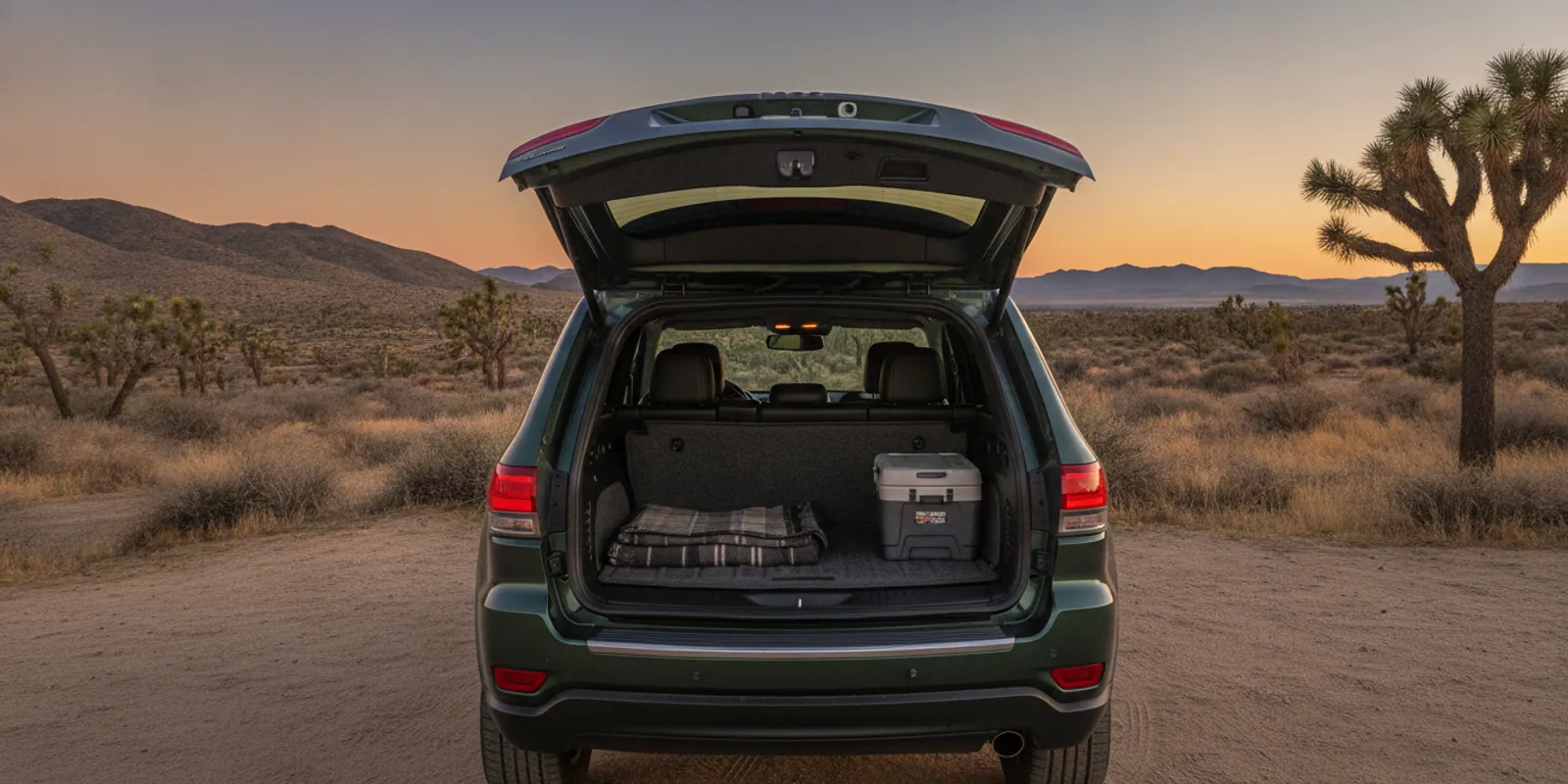
Jeep Grand Cherokee cargo space can look generous on paper, but the right fit depends on what you carry and how you use the rear seats. A stroller, work tools, camping supplies, or grocery bags each take up space differently. Before choosing a Grand Cherokee in the High Desert, make a short list of your regular cargo and test how it loads in the vehicle you are considering.
Contact Mojave Auto Group about vehicle options
What does Jeep Grand Cherokee cargo space mean for your needs?
Cargo capacity figures describe a measured volume, not necessarily the shape or ease of loading every object. A long, narrow item may fit in one vehicle but not another with a similar published volume. The height of the cargo opening, the distance from the liftgate to the seatbacks, and the wheel-well shape can all affect usable room.
Also consider whether you need all passenger seats available most of the time. On a two-row Grand Cherokee, the rear seats can remain upright while you use the cargo area behind them. The Grand Cherokee L adds a third row, which changes the arrangement: when the third row is in use, the space behind it is more limited than when it is folded. Exact dimensions and capacity can vary by model year and configuration, so check the specific vehicle rather than assuming all Grand Cherokees are identical.
Think about capacity in three practical ways:
- Everyday volume: The bags and smaller items you carry on a typical day.
- Large-item footprint: The length, width, and height needed for bulky or unusually shaped gear.
- Passenger-and-cargo balance: How much space remains when the seats you need are occupied.
How should you measure the gear you carry?
Start with the items that most often make a vehicle feel too small. Measure the longest and widest dimensions of a stroller, cooler, suitcase, folding chair, tool case, or sports equipment. If an item is flexible, estimate its normal packed size. Record whether it must stay upright, remain flat, or be easy to reach during a trip.
Then group your cargo into typical situations. For example, a family might compare a grocery run, a weekend with luggage, and a day trip with a stroller. A driver who camps might check a cooler, sleeping bags, and a storage bin together. This gives you a realistic test load instead of relying on a single oversized item or an abstract capacity figure.
Remember to include the people who travel with you. If you regularly carry adults in the second row, do not plan around folding that seat to make room for cargo. For a third-row model, consider how frequently you need all three rows. The right configuration is the one that supports your common passenger count and your common load without requiring a different arrangement every time.
What should you check in the cargo area?
When you inspect a Grand Cherokee, look beyond the floor area. Check the following details in person:
- Opening dimensions: Can your largest item pass through the liftgate opening without turning it at an awkward angle?
- Loading height: Is the lift-over height comfortable when lifting a heavy cooler or suitcase?
- Floor shape: Do the wheel wells or side trim interfere with wide, flat items?
- Seat folding: How easily do the seats fold, and does the resulting surface work for your cargo?
- Visibility and access: Can you reach everyday items without unloading everything else?
- Storage and restraint: Are there useful compartments or places to secure items, and do they suit what you carry?
If you bring a child seat, check how it fits with your passenger and cargo plan. A child seat can affect whether a seat folds or how much room is available to passengers. Do not assume an empty showroom vehicle will represent your usual setup.
How do two-row and three-row layouts compare?
The main choice is not simply “more seats” versus “fewer seats.” It is how often you need the additional seating and what cargo space remains in that configuration. A two-row Grand Cherokee may suit shoppers who generally carry five or fewer people and want the rear cargo area available behind the second row. The Grand Cherokee L may be worth considering when a third row is a regular need, but check the space behind the third row with those seats upright.
| Layout to evaluate | Useful when | What to test |
|---|---|---|
| Two-row Grand Cherokee | Your usual passenger count fits without a third row | Fit your regular load behind the second row and try folding the rear seats |
| Grand Cherokee L with third row upright | You often need additional passenger seating | Bring the bags or gear you still need to carry with all required seats in use |
| Grand Cherokee L with third row folded | You need a flexible cabin and more cargo room on some trips | Check the folded-seat surface, loading access, and room behind the second row |
This comparison is about configuration, not a substitute for published measurements. The model year, trim, equipment, and seat position can affect the vehicle you are viewing. Ask to confirm the exact specifications for that vehicle and test the layout that matches your routine.
How can you test cargo fit before choosing?
A focused test is more useful than a quick look in the showroom. Use these steps:
- Bring your measurements. Write down the dimensions of your largest regular items and note which must remain upright.
- Set the seats first. Put the passenger seats in the positions you normally use. For a three-row layout, raise the seats you need for a typical trip.
- Load the test items. Use your actual gear when practical, or bring boxes measured to match its footprint.
- Check loading and unloading. Try the liftgate opening, place heavier objects where you expect them to go, and see whether smaller items remain accessible.
- Repeat for a second scenario. Compare a daily setup with a weekend or family-trip setup, including any seats you would fold.
Take care not to block the driver's view or place loose objects where they could shift. The National Highway Traffic Safety Administration advises drivers to secure cargo and avoid items that can become hazards; review its vehicle safety guidance as you plan how passengers and belongings travel together. If you plan to use a cargo organizer or protective mat, check its fit with the floor and seat configuration. Accessories should not be assumed to come with a particular vehicle; confirm what is included and what would need to be added.
It can help to think through the loading sequence, too. Put items you may need during a stop near the liftgate, and place heavier pieces low and stable rather than balancing them on bags. Keep fragile items from being crushed, and avoid stacking cargo higher than the rear seatbacks if doing so would limit your view. A clean cargo area is easier to use when every item has a practical place.
What should used Grand Cherokee shoppers review?
For a used vehicle, cargo suitability still depends on the specific model year and configuration. Confirm the vehicle's seating layout and compare its published specifications with the actual vehicle. Open and close the liftgate, fold and raise each relevant seat, and inspect the cargo floor and trim for condition. Look for signs of damage that could affect loading or the way the rear area is used.
Check how the rear seats operate, whether latches and handles work as expected, and whether any included accessories fit securely. If the vehicle has a cover, mat, or organizer, ask whether it is included in the sale. A test drive can help you assess visibility and comfort, but the cargo-fit test should happen while parked, with the load secured and the driver's sightlines clear.
When you compare a new and used vehicle, separate the questions. First determine whether the size and layout work for you. Then compare the specific vehicle's year, condition, equipment, and price. A lower or higher capacity figure alone does not tell you which one is the better match for your everyday use.
For a used Grand Cherokee, also confirm that the seat configuration and any cargo equipment match the vehicle listing and the vehicle in front of you. Check that the liftgate opens smoothly and that its closing path is clear. If you rely on a cover to keep belongings out of sight, see whether one is present and how it stores when not in use. These small checks can clarify whether the vehicle is ready for your routine or whether you would need to adjust your plans.
How does cargo fit change across everyday situations?
A vehicle that works well for one task may feel less convenient for another. Think through at least three common situations before settling on a layout. A weekday grocery run may involve several small bags that need a level place to sit. A weekend trip may add luggage, a cooler, and passengers. A home project may require longer or dirtier items that you would not want near the seats.
For grocery bags, consider whether the cargo area offers a practical way to keep bags upright. For a road trip, decide whether each passenger needs a bag within reach or whether most luggage can stay in the rear. For gear that could shift or soil the floor, plan for a restraint method or protective covering that suits the vehicle. These are not just capacity questions; they are questions about how easily the space can be organized and kept usable.
High Desert travel can also make planning worthwhile. A trip out of town may mean packing water, snacks, coats, or recreation gear along with passengers' bags. Treat those as part of the load rather than adding them after you have already decided the cargo area is large enough. If you often carry passengers and gear at the same time, test that combined arrangement rather than evaluating cargo with the cabin empty.
What questions should you ask before choosing?
- What are the cargo measurements and capacity for this exact model year and configuration?
- Does this vehicle have two rows or three, and what space remains with my needed seats upright?
- Can I test-fit the items I carry most often?
- Which cargo accessories are included, and which are separate?
- Are there comparable SUVs in the available inventory with a layout that may suit my load better?
Shoppers comparing several vehicle types can also browse Mojave Auto Group’s vehicle selection and ask which current options are available to inspect. A direct comparison is most useful when you bring the same passengers and test items to each vehicle. You can also contact the dealership to ask about arranging a focused look at the cargo area. If your search includes more than one brand, comparing layouts in person can help you see how seat position, opening shape, and storage details differ.
Frequently asked questions
Does every Jeep Grand Cherokee have the same cargo space?
No. Capacity and usable room depend on the model year, body and seating configuration, and how the seats are positioned. Confirm the specifications for the exact vehicle you are considering.
Is the Grand Cherokee L better for carrying cargo?
It depends on whether you need the third row. With those seats upright, cargo space behind them is different from the space available when they are folded. Test the layout you expect to use most often with your usual passengers and items.
Will a stroller fit in a Grand Cherokee?
That depends on the stroller's folded dimensions and the vehicle's configuration. Measure the stroller, check the liftgate opening, and test-fit it with the rear seats set for your normal passenger needs.
Should I choose a vehicle based only on its cargo capacity number?
No. A capacity figure is useful for broad comparison, but it does not show whether a particular item fits through the opening or whether the space has a useful shape. Combine the published figure with an in-person fit test.
Ask about comparing available vehicles
What is a practical next step?
Measure your regular cargo, decide how many seats you need on an ordinary trip, and test the matching Grand Cherokee layout before you choose. A few minutes with your real measurements can make the difference between a capacity figure that sounds right and a vehicle that works for your life.