How does extreme heat affect car battery performance? High temperatures speed up the chemical processes inside a battery and can increase fluid loss and internal wear, so a battery weakened by desert heat may fail when you need it. For Barstow and other High Desert drivers, a visual check and a professional battery test before a long summer drive can help identify a problem early. You can learn more about Mojave Auto Group and its vehicle offerings. The broader Desert Car Care and Vehicle Service Education for High Desert Drivers guide provides additional High Desert maintenance context.
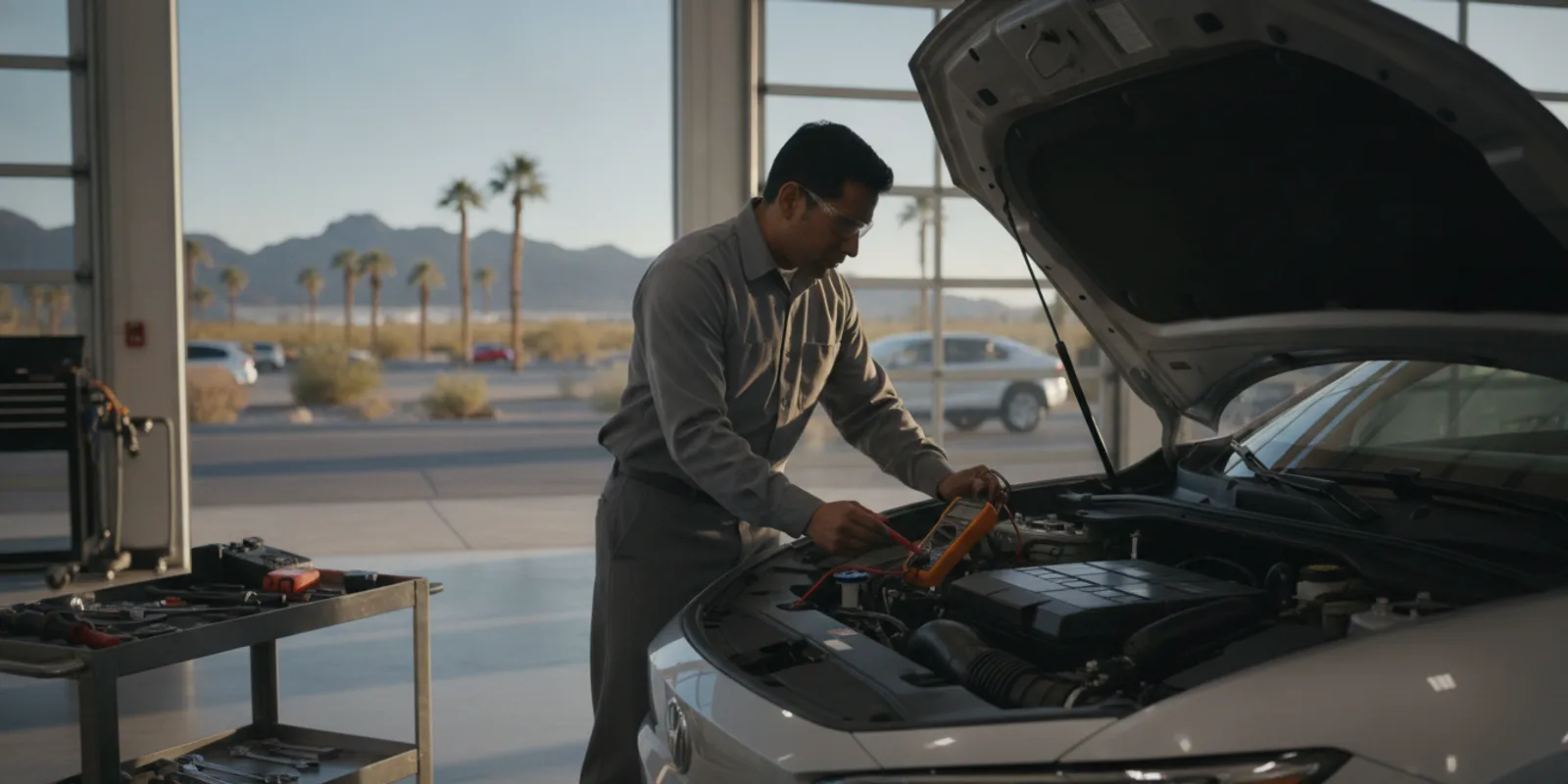
Contact Mojave Auto Group to ask about battery service
This guide explains why heat stresses batteries, what warning signs to notice, how to check a battery safely, and when to ask for help. Routine checks matter when daily driving includes hot parking lots, long highway stretches, or remote roads.
How Does Extreme Heat Affect Car Battery Performance in the Mojave Desert?
A typical 12-volt vehicle battery stores and releases energy through chemical reactions. Heat can make those reactions happen faster. That may help a battery deliver power in the short term, but sustained high temperatures can also accelerate corrosion inside the battery and the breakdown of its internal materials. Heat may contribute to water loss in batteries that require maintenance, too. Once enough damage accumulates, the battery may no longer hold or deliver the power the vehicle needs.
Consumer Reports explains how hot weather can affect car-battery life, even though many drivers think of cold weather as the main battery challenge. The useful takeaway is simple: a battery can be weakened during the hottest months and only show obvious trouble later, such as when the engine struggles to start. Heat is one factor, not a countdown clock; no one can tell from the temperature alone exactly when a battery will fail.
Several conditions can add to heat stress:
- Hot under-hood temperatures: After driving or sitting in the sun, the area around the battery can be hotter than the outside air.
- Repeated short trips: A vehicle may not run long enough between starts to restore the charge used to start the engine.
- High electrical demand: Air conditioning, lights, and accessories draw power, especially when the engine is off or the vehicle is only making brief trips.
- Age and prior wear: An older battery or one that has already been deeply discharged has less reserve to handle added stress.
- Loose or corroded connections: Poor contact can interfere with charging and starting, and corrosion may hide around the battery terminals.
For more general High Desert maintenance guidance, visit the Desert Car Care and Vehicle Service Education for High Desert Drivers pillar guide.
Heat does not mean every battery will suddenly fail, and a warm day alone is not a diagnosis. Battery condition, driving habits, vehicle design, and maintenance all matter. A test is more useful than guessing based only on the weather or the battery's appearance.
Warning signs your battery is failing in hot weather
A battery may give some warning before it stops starting the vehicle, but not always. Pay attention to changes, especially if they repeat over several days.
- The engine turns over more slowly than usual when you start it.
- You hear a click or several clicks instead of a normal start.
- Interior or exterior lights appear dim before the engine starts, or electrical features behave inconsistently.
- A battery or charging-system warning appears on the dashboard.
- There is visible corrosion around the battery terminals, a damaged case, or a strong unusual odor near the battery.
- The vehicle needs a jump-start more than once, or has been sitting unused for an extended period.
These clues can point to a battery concern, but they do not prove the battery is the cause. A starting or charging problem can also involve a connection, alternator, starter, or another electrical component. If the vehicle does not start, avoid repeatedly trying to crank it; repeated attempts can further drain the battery. Arrange appropriate help rather than treating a jump-start as a permanent fix.
Quick answer: Slow cranking, repeated jump-starts, dashboard warnings, or visibly damaged battery components are reasons to arrange a battery and charging-system check. A swollen, cracked, or leaking battery should not be handled casually. Keep away from it and seek professional assistance.
How to test your car battery before summer driving season
A sensible pre-summer check starts with what you can safely observe, then moves to a proper test if anything seems uncertain. Check the vehicle owner's manual for battery-specific instructions and safety warnings. If the battery is difficult to reach, appears damaged, or you are not comfortable working near it, leave the inspection to a qualified technician.
- Look for obvious damage. With the engine off and the key removed, look for a cracked, bulging, or leaking battery case. Do not touch leaking material or attempt to open a sealed battery.
- Check the terminals visually. Look for heavy buildup or a cable that appears loose. Do not bridge the terminals with a tool or metal object. Cleaning or tightening should be done only if you know the correct safe procedure for your vehicle.
- Notice how the vehicle starts. A slower-than-usual start can be an early clue. Make a note of whether it happens repeatedly and whether warning lights appear.
- Request a battery test. A service professional can check the battery's condition and, when appropriate, the vehicle's charging system. This gives more useful information than relying on a visual check alone.
- Ask what the results mean. If a test indicates a weak battery, ask whether it needs replacement now, whether a connection or charging issue needs attention, and what specification your vehicle requires.
Do not use a generic online voltage reading as the only basis for replacing a battery. Readings can vary with temperature, charge level, battery type, and the vehicle's condition. For an accurate assessment, follow the maker's instructions or have the vehicle tested using equipment suitable for it.
There is a difference between a quick look and a battery test. A visual check may reveal a loose-looking cable or visible damage, but it cannot tell you how much usable capacity remains. A test can help assess whether the battery is holding charge and whether the charging system is working as expected. If the result points to a broader electrical issue, replacing the battery alone may not resolve the symptom.
When you call for an appointment, share the details that can help the service team understand the concern: whether the engine cranks slowly, whether the problem happens after the vehicle sits, if a warning light is on, and whether you recently needed a jump-start. You do not need to diagnose the cause yourself. A clear description of what you observed is more useful than guessing which component has failed.
Be cautious with jump-start instructions found online. Vehicle layouts and procedures differ, and connecting cables incorrectly can cause damage or injury. Use the owner's manual for your specific vehicle and follow its safety steps. If the battery is damaged or you are unsure how to proceed, call for professional assistance instead of experimenting.
Before a road trip, check that your phone is charged, keep roadside assistance information available, and plan stops in advance. These steps do not prevent battery wear, but they can make a delay less stressful if a starting issue occurs far from home.
Need a battery check before a desert trip? Contact Mojave Auto Group in Barstow.
How Does Extreme Heat Affect Car Battery Life in the Mojave Desert?
There is no dependable single lifespan for every car battery in the Mojave Desert. Heat exposure, battery design, vehicle electrical needs, driving pattern, maintenance, and the condition of the charging system can all affect how long it remains reliable. Two batteries of the same age may perform differently.
Instead of waiting for a specific birthday or mileage figure, consider the battery's age together with its test results and symptoms. Check the manual or battery label for relevant service guidance, and ask a technician to assess it if it is getting older, has struggled to start, or has needed a jump. A test can help you make a decision before the battery leaves you stranded, but it cannot guarantee how long it will continue to work.
It also helps to reduce avoidable strain. Turn off accessories when the engine is off, avoid leaving lights on, and take a longer drive when practical after repeated short trips. Keep the battery secured and its connections in good condition. These habits support the vehicle's electrical system, but they cannot undo existing internal wear or substitute for a needed repair.
Consider the way you use the vehicle when planning a check. A car parked outdoors during the day, a truck that makes frequent short stops, and a family SUV used for longer drives may face different patterns of heat and electrical demand. Those examples do not predict battery health by themselves, but they are useful context to share during a test. Mention if the vehicle has been sitting unused, if accessories are plugged in while it is parked, or if starting trouble began after a period of especially hot weather.
Before driving through remote stretches, do not rely on an old jump-start or a battery that has already shown symptoms. Make sure your vehicle is in safe working order, bring water and a charged phone, and know how you will request roadside assistance if needed. Preparation cannot guarantee a trouble-free trip, but checking concerns before leaving is safer than ignoring them until you are far from services.
Battery service and replacement at Mojave Auto Group in Barstow
If you are seeing warning signs, or you want a battery checked before a hot-weather trip, contact Mojave Auto Group in Barstow to ask about service for your vehicle. You can use the dealership's contact page to ask about your concern. Mojave Auto Group includes Mojave Toyota of Barstow, Mojave Nissan of Barstow, and Mojave Chrysler Dodge Jeep RAM of Barstow, with manufacturer-authorized service for its six franchised brands. Tell the service team the vehicle's year, make, and model, describe what happens when you start it, and mention any dashboard warning you have seen.
When discussing a test or replacement, useful questions include:
- Did the test find a weak battery, a charging concern, or a connection issue?
- What battery specification does this vehicle require?
- Is replacement recommended now, or should another part of the starting and charging system be checked first?
- What care or follow-up does the vehicle maker recommend?
Clear answers help you understand the next step without replacing parts based on a guess. Availability and the appropriate service can depend on the vehicle, so confirm details with the dealership when you contact them.
Contact Mojave Auto Group about battery testing or replacement.
Frequently asked questions
Can a car battery fail because of desert heat?
Yes. Prolonged heat can accelerate wear inside a battery and reduce its ability to hold or deliver power. Heat does not guarantee that a battery will fail on a particular day, so use warning signs and a test to assess its condition.
Should I wait until my battery will not start the car?
No. If you notice slow cranking, repeated jump-starts, a battery warning, or visible damage, arrange a check rather than waiting for a no-start. A test can help identify whether the battery or another part of the starting and charging system needs attention.
Does a battery need to be replaced every summer in Barstow?
No fixed annual schedule applies to every vehicle. Battery life varies with its age, design, usage, heat exposure, and condition. Follow your owner's manual and use test results and symptoms to guide the decision.
What should I do if the battery looks swollen or is leaking?
Do not touch, open, or attempt to jump-start a visibly damaged battery. Keep away and contact a qualified service professional for safe assistance. If the vehicle is in an unsafe location, prioritize personal safety and arrange roadside help.
Desert heat can put extra stress on a car battery, but symptoms and a proper test matter more than assumptions. If your vehicle is slow to start or the battery has not been checked in a while, arrange an inspection before your next demanding drive.