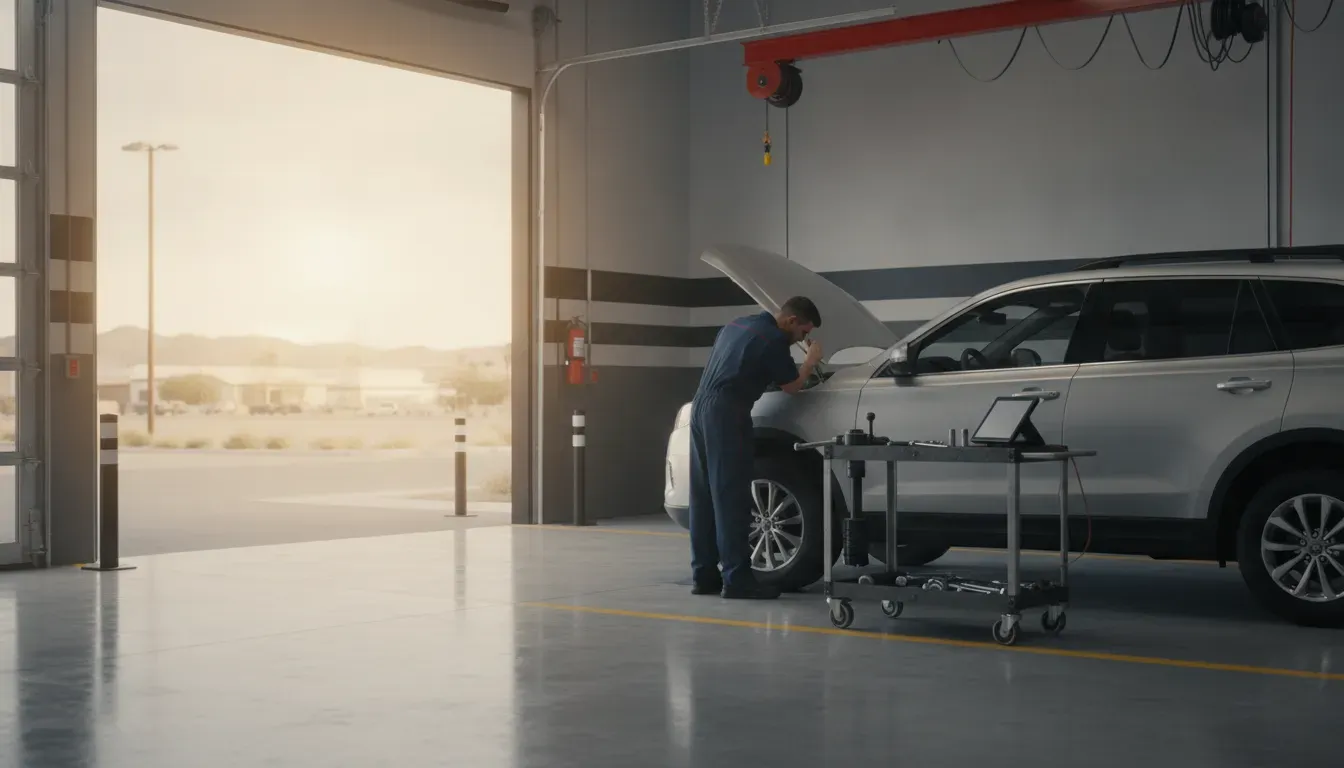
When you search for auto repair Barstow drivers can rely on, the first question is often whether the vehicle needs routine maintenance or immediate attention. A small change in braking, handling, starting, or engine sound can be easy to dismiss when you depend on your vehicle for work, family errands, I-15 travel, or a commute toward Fort Irwin. Knowing what to watch for can help you make a better service decision before a minor concern becomes a larger interruption.
Schedule service with Mojave Auto Group when your vehicle is due for maintenance or you need a technician to review a warning sign.
Quick answer: Barstow drivers should follow the maintenance schedule in the owner's manual, pay attention to new warning lights or changes in vehicle behavior, and provide the technician with the vehicle's year, make, model, mileage, symptoms, and recent work. Mojave Auto Group provides manufacturer-authorized service for Toyota, Nissan, Chrysler, Dodge, Jeep, and RAM at its Barstow location.
Routine maintenance is the first line of defense
Routine maintenance is not only about keeping a vehicle looking and feeling new. It gives a service team regular opportunities to check systems that affect reliability, safety, and day-to-day drivability. The right schedule depends on the vehicle, its powertrain, mileage, age, and driving conditions, so the owner's manual and the vehicle's maintenance reminder should be the starting point rather than a generic calendar.
Barstow conditions can add practical considerations. Hot weather can be demanding on batteries, cooling systems, fluids, and tires. Dust, long highway trips, frequent stop-and-go driving, towing, hauling, and off-road use can also change how quickly certain components wear. These conditions do not automatically mean a vehicle needs extra work, but they are useful details to share when a technician recommends an inspection or service.
Oil and fluid service
Oil service helps keep the engine lubricated and gives the technician a chance to look for visible leaks, fluid concerns, or other changes. Use the oil type and service interval specified for your vehicle. If the oil-pressure warning light appears, the engine is making a new knocking or ticking sound, or you see a fresh puddle under the vehicle, do not assume the next routine appointment is soon enough. Pull over safely and ask for guidance before continuing to drive.
Other fluids also deserve attention, including coolant, brake fluid, transmission fluid where applicable, power steering fluid where applicable, and windshield washer fluid. A fluid level that drops repeatedly is not simply a refill reminder. It can signal a leak or another issue that should be diagnosed.
Tires, brakes, and alignment
Tires are the vehicle's contact with the road, so inspect them visually and follow the pressure listed on the vehicle placard, usually found on the driver's doorjamb. Look for low pressure, uneven wear, cracks, bulges, or an object in the tread. A vehicle that pulls to one side, vibrates at certain speeds, or develops a crooked steering wheel may need a closer look at the tires, wheels, suspension, or alignment.
Brake changes should be treated seriously. Squealing can have several causes, but grinding, pulsation through the pedal, a longer stopping distance, pulling while braking, or a brake warning light calls for prompt inspection. Mojave Auto Group's service information describes brake pad service with inspection of related components such as discs, calipers, lines, hoses, cylinders, and the master cylinder. Ask what the inspection found and which work is urgent, recommended soon, or simply something to monitor.
Battery, belts, filters, and visibility items
A slow start, clicking when you turn the key or press the start button, dimming lights, or an intermittent electrical issue can point to a battery or charging-system concern. In a hot climate, a battery may deserve attention before a complete failure leaves you stranded. A test is more useful than guessing based on age alone.
Air filters, cabin filters, wiper blades, lights, belts, hoses, and the cooling system also affect comfort and dependability. Some items are visible during a basic inspection, while others require a technician to evaluate condition and fit. Ask for the reason behind each recommendation and whether the work relates to safety, reliability, emissions, comfort, or routine wear.
Which warning signs should not wait?
Not every dashboard light means the same thing, and the exact symbol should be confirmed in the owner's manual. A steady check-engine light may allow you to arrange a prompt appointment if the vehicle is running normally, while a flashing check-engine light, oil-pressure light, overheating indication, or brake warning can require a more immediate response. If the vehicle is smoking, losing power, leaking a large amount of fluid, overheating, or behaving unpredictably, stop in a safe place and seek assistance.
Use your senses as early signals. New grinding, clunking, squealing, hissing, burning smells, fuel odors, shaking, or steering changes are useful information for a service advisor. Note when the symptom happens: during a cold start, at highway speed, while turning, under braking, over bumps, with the air conditioner on, or after the vehicle warms up. That detail can save time during diagnosis.
A practical warning-sign checklist
- Dashboard lights: Record the color, symbol, and whether the light is steady or flashing.
- Braking changes: Note grinding, squealing, pedal pulsation, pulling, or a change in stopping feel.
- Handling changes: Report pulling, vibration, wandering, uneven steering, or a new feeling through the wheel.
- Starting problems: Describe slow cranking, clicking, intermittent starts, or a no-start event.
- Leaks and smells: Identify the color or odor if you can do so safely, but never touch an unknown fluid.
- Temperature concerns: If the temperature rises, the warning appears, or steam is visible, stop driving and let the vehicle cool safely.
How do you know whether a repair is urgent?
Urgency depends on the symptom, the system involved, and whether the vehicle remains safe to operate. A maintenance reminder, worn wiper blade, or scheduled filter replacement may be handled through a planned appointment. A brake warning, overheating, severe steering problem, major leak, or loss of power deserves faster attention. When you are unsure, describe the symptom to the service department before driving farther.
A useful service conversation separates three categories:
- Immediate safety concern: Work that affects braking, steering, visibility, tire integrity, overheating, or the ability to control the vehicle.
- Reliability concern: Work that may lead to a breakdown or leave you unable to start or continue a trip.
- Routine recommendation: Maintenance based on mileage, time, inspection results, or the manufacturer's schedule.
This framework does not replace a professional diagnosis. It simply helps you ask clear questions and understand why a recommendation may be prioritized. If a repair estimate includes several items, ask which one should be completed first and what could happen if a lower-priority item is postponed.
Review current service specials before your appointment for available offers and service details. Specials and eligibility can change, so confirm the terms with the service department.
What should you bring to an auto repair appointment?
The more complete the information, the easier it is for the service advisor to create a useful starting point. Before the appointment, gather:
- Vehicle details: Year, make, model, trim, approximate mileage, and VIN if available.
- Symptom notes: What you noticed, when it started, how often it happens, and whether weather, speed, braking, turning, or engine temperature changes it.
- Warning-light information: A photo of the dashboard can help if the light turns off before the appointment. Do not take a photo while driving.
- Maintenance records: Recent oil changes, tire work, battery replacement, repairs, recalls, or work performed elsewhere.
- Accessories and keys: Bring the keys used for the vehicle and mention aftermarket accessories or equipment that could affect the concern.
- Travel needs: Tell the advisor about an upcoming trip, work schedule, towing plans, or a time-sensitive need so expectations can be discussed early.
It also helps to use precise descriptions. Instead of saying that the vehicle "feels off," explain that it vibrates above a certain speed, pulls right during braking, hesitates after a cold start, or makes a sound over bumps. If you cannot reproduce the problem, write down the conditions in which it occurred. Do not attempt to diagnose or disassemble a safety system before the appointment.
Choosing a Barstow service location for multiple vehicle brands
Mojave Auto Group operates a multi-brand service department at 631 W Main St in Barstow. Its service information lists manufacturer-authorized service support for Toyota, Nissan, Chrysler, Dodge, Jeep, and RAM. That can be convenient for a household with vehicles from more than one brand or for drivers who want to discuss service with a team familiar with the vehicle's manufacturer requirements.
When comparing service options, look for a clear explanation of the inspection, the work recommended, the parts or fluids involved, and the next maintenance milestone. A good appointment should leave you with a practical understanding of what was checked and what action is appropriate. If you have a warranty, maintenance plan, manufacturer program, or recall question, mention it when scheduling so the team can review the right information.
Mojave Auto Group's listed service and parts hours are Monday through Friday from 7:00 AM to 6:00 PM and Saturday from 8:00 AM to 3:00 PM, with Sunday closed. Hours and appointment availability can change, so use the online service appointment page to request a time and confirm current details.
Ways to prepare for a smoother repair conversation
Ask for the inspection findings
Ask what the technician observed, which measurement or test supports the recommendation, and whether the condition is unsafe, likely to cause a breakdown, or simply approaching a routine service interval. You do not need to know every mechanical term to make an informed decision. A clear explanation and a written estimate can help you compare urgency and plan the work.
Keep the maintenance plan realistic
If the vehicle needs more than one item, ask whether the work can be prioritized across more than one visit. The safest option is to address an urgent safety concern first. For routine items, ask when the work should be completed and what signs would move it higher on the list. This is especially helpful when a vehicle is used for a long daily commute or an upcoming trip through the High Desert.
Check for available offers
Service offers can help with eligible maintenance, but the exact terms matter. Read the current offer, confirm whether it applies to your vehicle and service, and ask whether additional parts or labor are outside the offer. The Mojave Auto Group service specials page is the best place to review available promotions before you schedule.
When should you schedule auto repair in Barstow?
Schedule service when the maintenance reminder is due, when the owner's manual calls for an interval service, or when you notice a change that does not resolve on its own. Do not wait for a breakdown to ask about a known issue. A planned visit gives you time to document the symptom, gather records, compare scheduling options, and ask about service specials.
For drivers who travel between Barstow, Victorville, the Inland Empire, and Fort Irwin, reliability planning matters. Before a long trip, check tire condition and pressure, exterior lights, wipers, fluid levels, battery starting behavior, and dashboard warnings. These checks do not replace an inspection, but they can help you identify a reason to schedule one before leaving town.
If you need help deciding what to do next, contact Mojave Auto Group with the vehicle details and symptom description. You can also request an appointment through the service scheduling page.
A practical next step for Barstow drivers
Auto repair is easier to manage when you act on small changes, keep basic records, and ask what a recommendation means for safety, reliability, and timing. Follow the vehicle's maintenance schedule, treat serious warning signs with urgency, and bring useful details to the service advisor. With manufacturer-authorized service for Toyota, Nissan, Chrysler, Dodge, Jeep, and RAM in Barstow, Mojave Auto Group gives local drivers a place to discuss routine maintenance and repair needs across multiple brands.
Schedule your Barstow service appointment and check the current service specials before you visit. If you are not sure which department or appointment type fits your concern, contact the dealership first.